
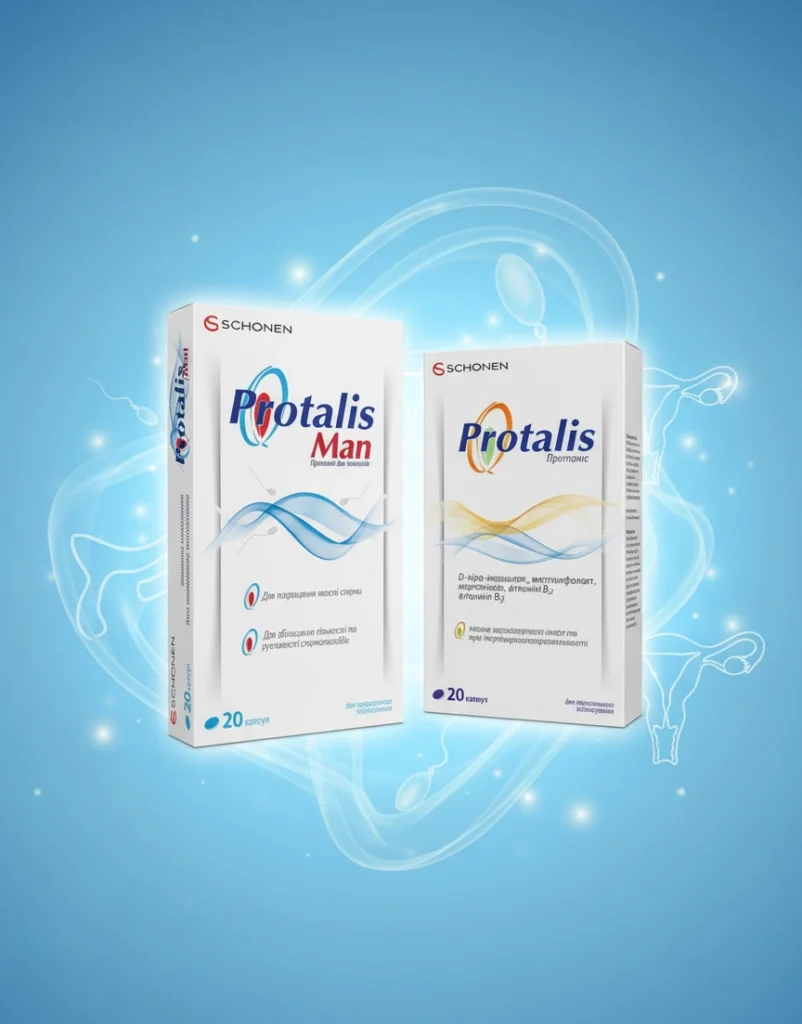
Reproductive health is a complex interplay of hormonal, metabolic, and physiological processes. It depends on age, stress levels, nutrition, micronutrient status, the condition of the endocrine system, and lifestyle. During pregnancy planning, the body’s needs change for both women and men. Protalis complexes are designed to support these natural processes at different stages—from preconception preparation to maintaining normal reproductive system function. Their focus is on micronutrients and biologically active ingredients that are scientifically supported and recognized as important for reproductive health.
Key Factors Influencing Reproductive Health
1. Micronutrient status
Important micronutrients include:
- folates
- zinc
- selenium
- coenzyme Q10
- L-carnitine
- vitamin D
- B-vitamins
- antioxidants
These nutrients participate in energy metabolism, cellular processes and general reproductive wellbeing.
2. Oxidative stress
- In men, oxidative load may affect cellular protection.
- In women, it may influence mitochondrial energy processes.
Antioxidants help maintain balance.
3. Hormonal balance
Affected by:
- stress
- sleep disturbances
- irregular meals
- micronutrient deficiencies
4. Age-related factors
With age, the need for nutrients increases—those that:
- support cellular energy;
- participate in metabolic processes;
- compensate for oxidative stress.
How Protalis Complexes Support Reproductive Wellbeing
1. Support for women
Protalis may contain components important during preconception:
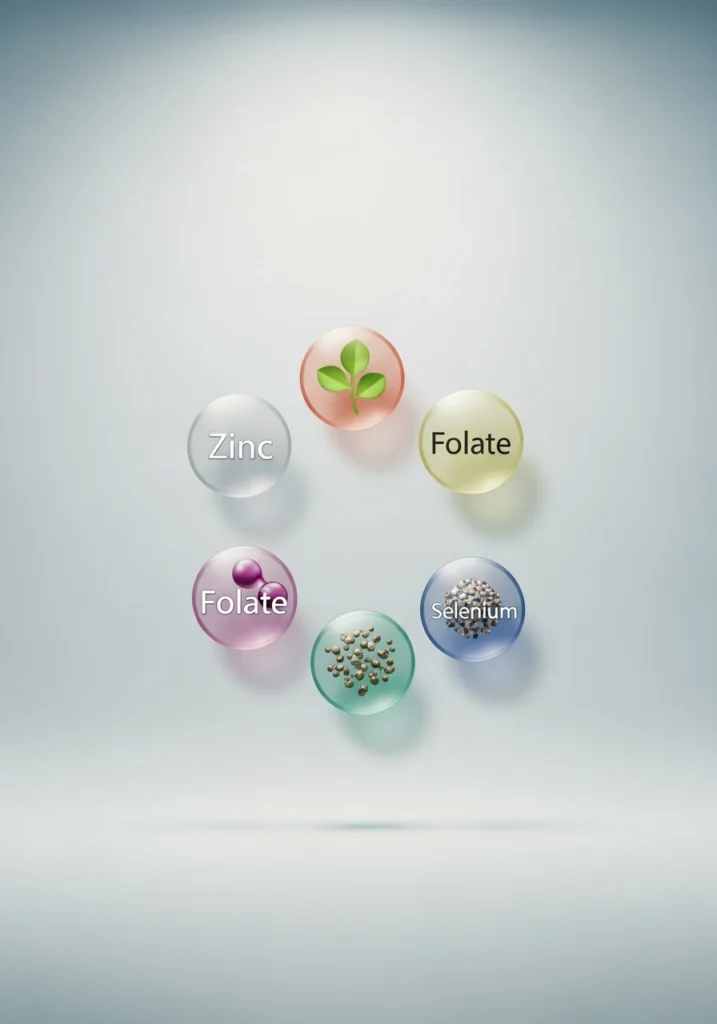
- Folate — involved in metabolic processes;
- Iron and B12 — support energy metabolism;
- Zinc and selenium — antioxidant protection;
- Vitamin D — essential for overall metabolism;
- Antioxidants — help counteract stress.
These complexes are designed for daily support of the female body.
2. Support for men
In men’s Protalis formulas, there may be:
- Zinc — a key micronutrient;
- Selenium — involved in cellular protection;
- Coenzyme Q10 — linked to energy metabolism;
- L-carnitine — supports cellular processes;
- Antioxidants — counteract the effects of free radicals.
These nutrients are considered important for male reproductive health.
Table 1. Key Nutrients and Their Role
| Nutrient | Women | Men |
| Folates | metabolic processes | — |
| Zinc | hormonal regulation | cellular function |
| Selenium | antioxidant | antioxidant |
| CoQ10 | energy metabolism | mitochondrial support |
| L-carnitine | — | cellular metabolism |
| Vitamin D | general metabolism | general metabolism |

3. Preparing the body for pregnancy
Protalis may support:
- daily nutrient balance
- energy metabolism
- adaptation during stress or seasonal changes
Table 2. Nutrient Focus During Different Stages
| Stage | Women | Men |
| Preparation | folates, antioxidants | zinc, selenium, Q10 |
| Seasonal shifts | vitamin D | antioxidants |
| High stress | B-vitamins | B-vitamins, L-carnitine |
Conclusion
Reproductive wellbeing is the result of balanced nutrition, reduced oxidative stress, sufficient micronutrient intake and a stable lifestyle. Protalis complexes are designed to support this natural balance in both men and women during the preparation phase. Buy Protalis officially on the Medizine website and protect your family from allergy. Visit our Health & Skin Care Blog for useful tips, news, and articles.
FAQ
What is reproductive health and why is it important during pregnancy planning?
Reproductive health is a combination of hormonal, metabolic, and physiological processes that affect the body’s ability to conceive and maintain overall balance. During pregnancy planning, both women and men have increased needs for certain micronutrients, antioxidants, and compounds that support cellular and energy processes.
What factors most often affect the reproductive health of women and men?
Reproductive health is influenced by micronutrient levels, oxidative stress, hormonal balance, age, stress, sleep quality, and nutrition. Deficiencies in folates, zinc, selenium, B vitamins, vitamin D, and antioxidants can affect cellular processes and the overall condition of the reproductive system.
How do Protalis complexes support women’s bodies during preparation for pregnancy, pregnancy, breastfeeding, and IVF programs?
The Protalis line for women includes products designed for different stages of the reproductive journey.
Protalis FemiFolat — an active folate-iodine-omega complex — is intended for use during preparation for pregnancy, throughout pregnancy, and during breastfeeding. It provides an additional source of methylfolate — the biologically active form of folic acid with improved absorption — as well as iodine and omega-3 polyunsaturated fatty acids. The complex helps create optimal conditions for the body’s proper functioning during these periods.
Protalis IVF is used within comprehensive assisted reproductive technology (ART/IVF) programs. It provides an additional source of D-chiro-inositol, alpha-lipoic acid, superoxide dismutase, methylfolate, and manganese, supporting optimal dietary conditions for women’s bodies during IVF programs.
What role do Protalis complexes play in supporting male reproductive health?
Male Protalis formulas contain micronutrients and bioactive compounds such as zinc, selenium, coenzyme Q10, L-carnitine, and antioxidants. These are involved in cellular, energy, and antioxidant processes that are considered important for male reproductive health.
When is it appropriate to use Protalis complexes?
Protalis complexes can be used during the preparation for pregnancy, periods of increased stress, seasonal challenges, or lifestyle changes. They are designed for daily support of both women and men, helping to maintain a stable micronutrient balance and overall metabolic function.
References
- Male and Female Reproductive Physiology, Nature Reviews Endocrinology.
- Role of Zinc and Selenium, Reproductive Biology.
- CoQ10 and Reproductive Health, Journal of Clinical Medicine.
- Folate Metabolism Review, American Journal of Clinical Nutrition.
- Antioxidants and Reproductive Wellbeing, Nutrients.